
Before help arrives
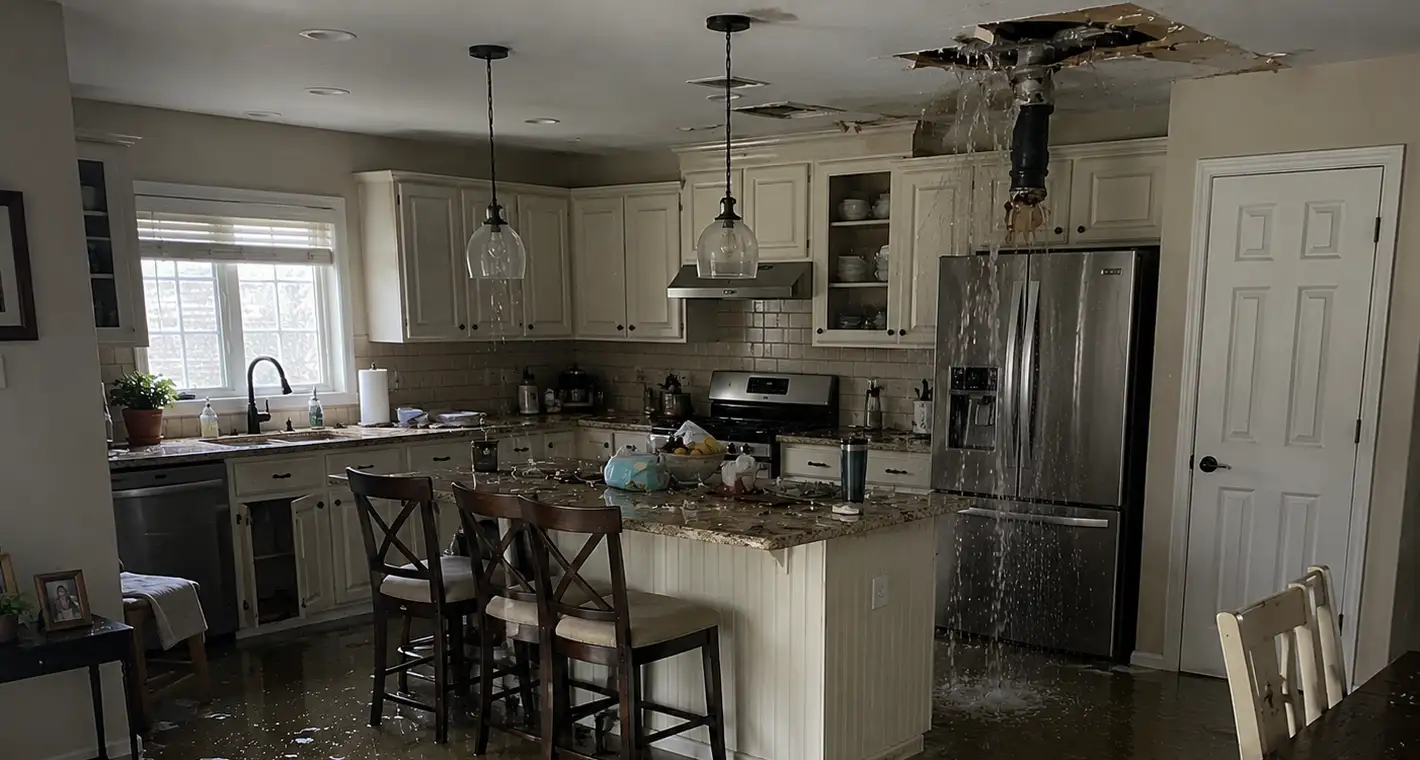
- Shut the water off at the fixture or the main if you can reach it safely.
- Keep out of any room where water has reached outlets, cords, or the electrical panel.
- Lift furniture off wet carpet and move what you can to a dry floor.
- Photograph the damage and the failure point before anything is moved.
- Do not use a household vacuum to pick up standing water.
Why water damage behaves the way it does in North Texas
This corner of North Texas stands on two different grounds at once, and the Elm Fork of the Trinity River is roughly the line between them. East of it, Carrollton, Farmers Branch, Addison, Plano and Richardson sit on Blackland Prairie clay, which takes on water through a wet winter and swells, then dries through the summer and pulls away until cracks open across a yard. West and north of the river, Lewisville, Flower Mound and Highland Village sit on the sandy loam of the Eastern Cross Timbers, which takes rain straight down. The weather over both is the same: roughly thirty-eight inches of rain a year arriving in a handful of violent storms, high dew points from May through September, damaging hail most springs, and a few hard freezes each winter.
Three consequences follow, and they shape almost every loss in the area. Nothing here has a basement, so the water heater and the indoor half of the air conditioner sit on a platform in the attic, and a failure begins above a finished ceiling rather than below a floor. Everything sits on a slab, so water that gets beneath the concrete travels sideways through the fill and surfaces somewhere other than where the pipe gave way. And the region still works from February 2021, when the freeze held for several days while power went out in rotation and the burst lines all arrived together as the heat came back on.
What happens after the water stops
Removing the water you can see is the beginning rather than the end. Water moves by gravity and capillary action into carpet padding, under vinyl and laminate, through baseboard into wall cavities, and along framing into rooms that were never wet on the surface. A floor that feels dry underfoot can still hold enough moisture in the subfloor to keep the structure wet for weeks.
Restoration work addresses that hidden portion.
Extraction pulls water from carpet and padding rather than only off the surface. Air movers break the still layer of air against wet materials so moisture can leave them, and dehumidifiers remove that moisture from the air so it does not settle back into dry building materials elsewhere in the house. Moisture meters and thermal imaging locate water inside walls and beneath flooring, and readings taken across several days confirm whether materials are genuinely returning to normal.
Where water was contaminated, or where material has been saturated long enough that drying it in place is not appropriate, that material is removed instead. Carpet padding, the lower band of drywall, and wet insulation are the usual candidates.
Services
- Water Extraction & DryingStanding water removal and controlled structural drying under moisture readings.
- Slab Leak DamageWater surfacing through a slab-on-grade foundation, located and dried out.
- Sewage CleanupContaminated water handled with containment, removal and cleaning.
- Mold RemediationGrowth that established after water sat longer than it should have.
- Burst pipe, supply line and water heater cleanup
- Ceiling and drywall water damage
- Appliance and washing machine leak cleanup
- Moisture inspection and mapping
Cities we cover in North Dallas
- CarrolltonZIP 75006, 75007, 75010
- LewisvilleZIP 75057, 75067, 75077
- PlanoZIP 75023, 75024, 75025, 75074, 75075, 75093, 75094
- Flower MoundZIP 75022, 75028
- The ColonyZIP 75056
- CoppellZIP 75019
- Farmers BranchZIP 75234, 75244
- AddisonZIP 75001, 75254
- Highland VillageZIP 75077
- RichardsonZIP 75080, 75081, 75082
Frequently Asked Questions
- Will my homeowners insurance cover water damage?
- It depends on the cause rather than the damage itself. Policies commonly cover sudden and accidental events such as a burst supply line, a failed water heater, or an appliance hose that lets go. Damage that developed gradually from a long-standing leak, and damage from surface flooding, are typically handled differently or excluded. Photograph everything before anything is moved, keep any failed part, and report the loss promptly, because most policies require you to take reasonable steps to prevent further damage.
- What does water damage restoration cost?
- Cost tracks the size of the affected area, how long the water sat, whether the water was clean or contaminated, and how much material has to be removed rather than dried. A contained loss caught within hours is a different job from one that has been spreading for days. Any provider should walk the property and give you a written scope before work begins rather than a number over the phone.
- How fast can someone reach my property?
- Most of the service area sits a few minutes off Interstate 35E, the President George Bush Turnpike or the Dallas North Tollway, so under ordinary conditions a provider reaches a Carrollton, Farmers Branch, Addison or Coppell address quickly. The edges take longer: Highland Village and the western side of Flower Mound are further from those corridors. After a regional freeze or a spring hail storm, when every provider in North Texas is working through a backlog, everything takes longer.
- What is the difference between water damage restoration and mold remediation?
- Restoration deals with the water itself: removing it, drying the structure, and returning materials to normal moisture levels. Mold remediation deals with growth that has already established, which requires containment of the work area, controlled removal of affected material, and cleaning rather than simply drying. Water damage caught early often prevents the second problem entirely, which is why drying time matters.
- Do I need to leave the house during the work?
- Usually not. Most losses are confined to part of a home and drying equipment, though loud, runs safely with people in the house. Situations that more often call for staying elsewhere include contaminated water in living space, damage affecting the electrical system, or remediation work that requires sealing off a large portion of the floor plan.
- Who are the providers on this site?
- They are independent restoration contractors working in North Dallas. This site is not a contractor and does not perform restoration work. It connects homeowners with providers in their area, and it is the homeowner's responsibility to verify that the contractor they hire carries the license and insurance the work requires.